project management
- Project management is the role of ensuring that all aspects of a given production run smoothly by overseeing a number of people/ departments.
- The project manager would ensure that deadlines are met and the brief is followed by leasing with others and holding them into account.
- project management is the effective planning and running of a project, from the ideas point to the end product and evaluation
- planning requires an outline of the tasks, deadlines, contingencies and milestones that will be required to manage the project efficiently.
key words:
- tasks (that need to be done)
- deadlines (for each task)
- milestones (within the tasks and overall projects)
- contingencies (back up plan)
Gantt chart:
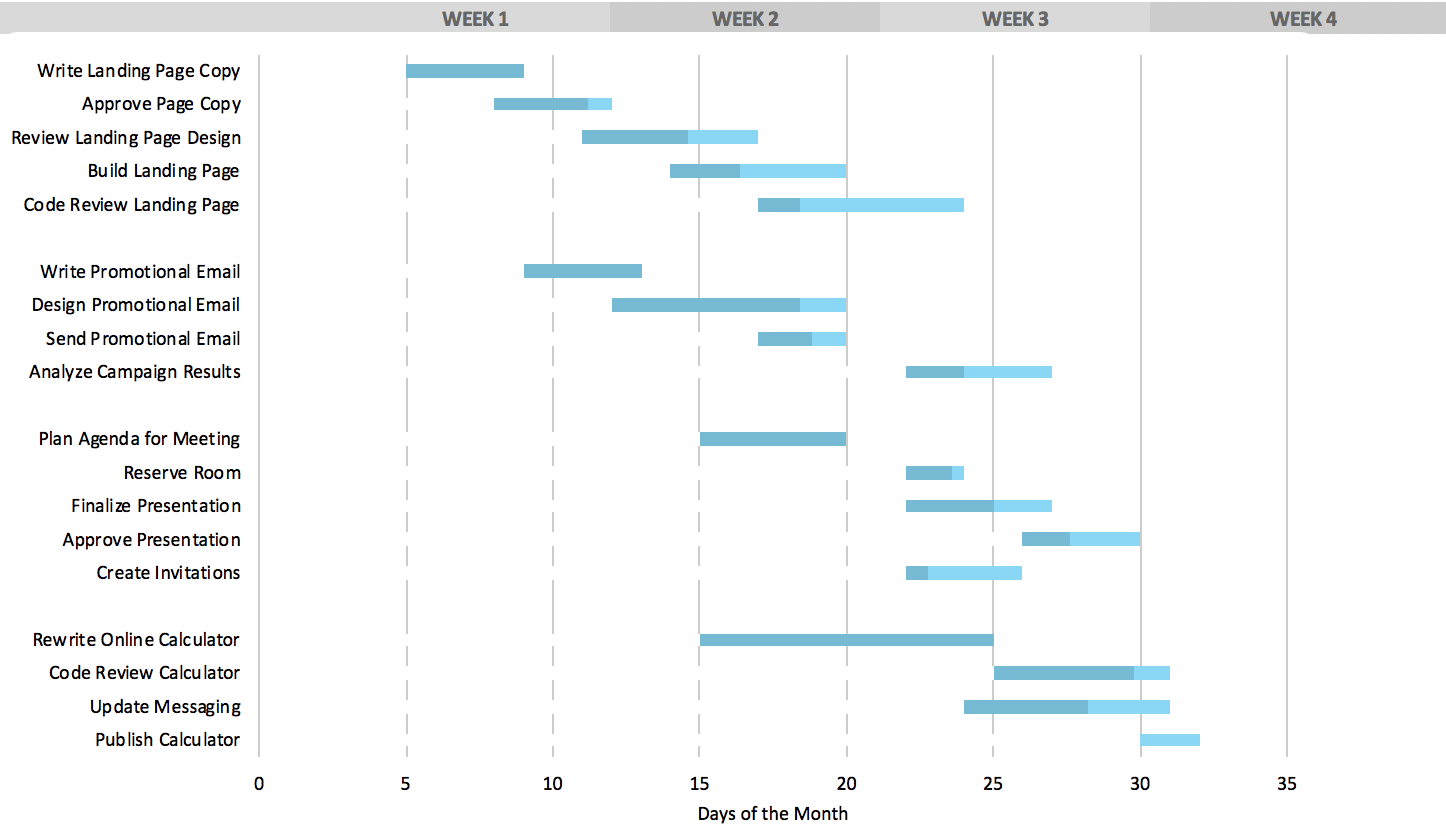
- A Gantt chart is a type of bar chart that illustrates a project schedule, named after its inventor, Henry Gantt, who designed such a chart around the years 1910–1915. Modern Gantt charts also show the dependency relationships between activities and current schedule status.
- A Gantt chart uses horizontal bars to illustrate project completion dates, progress, and milestones and dependencies.
- its the ultimate protection tool
- each bar represents each part of production
- its used as a project calendar/ production tool
- where tasks overlap with others
- start and end of entire project
to do list
workflow: split by team members so that it is clear who is doing what
pre production: product management:
- initial pitch or treatment-
- call sheet- who is needed for what scenes
- budget proposal form- amount of money needed to film
- budgets- amount of money available
- contract- contracts with actors and employees
- storyboards- the plot of the film
- set diagram-
- camera shot list- list of scenes that are being filmed.
- talent release form- legal permission to use someone in your project.
- location release form- permission to film on certain land
- daily progress report
- continuity sheet
- equipment log- the equipment needed
- shooting script- which scenes in certain order and timings
- visual effects (FX) breakdown
- audience questionnaire for product testing- feedback
- asset log
- risk assessment- health and safety
- recce/ scouting sheet
- editing log- editing scenes after
logistics:
this is the complex process of organising resources for production
this includes getting:
- personnel
- props
- production equipment
- locations
- transportation
- care on location
daily planner/ call sheet:
these are used each day on production.
ensures everyone on set knows what to do and what their goals are.
helpful because it clarifies goals for day in one, simple sheet which can be circulated amongst everyone.
lists all resources and logistical details as well as creative aims.
logistic forms:
- these are used each day on production
- besides the one listed below, there may also be a clearances form
- they are known as release forms as the individual releases their claim over their likeness, property or ideas by signing
why are these forms essential to media production?
- individual release form- sign over rights to their work
- consent form- for all people who are in production
- location form- for all locations used in film
what are the four key considerations we need to think about when planning an effective media project:
- budget
- how to have effective communication
- know your aims and objectives


Good work here!
ReplyDeleteDon't forget those 4 key words when discussing project management.
Miss C